Our design workshop began two weeks ago Monday, and ended last Saturday. It was hosted by the Chiang Mai University Faculty of Fine Art Craft and Design Service Center. The real name of the workshop ("Believe" Lanna Style International Workshop) was almost as long as the organization hosting it. Monday morning began with two excellent presentations by Professor Vithi Panitchapun covering Northern Thailand's history, culture, and visual culture (I have both power points saved as PDFs, they really are great, but it might not be that nice of me to upload them without permission, but if anyone is interested I could send them a copy). After Vithi's presentations he took us around Chiang Mai and Lampang for two days. It reminded us a bit of being in Italy, the tour bus rolling through the green hills, but tropical.
I found out about the workshop the night before it began thanks to our housemate AS. Apparently two designers had canceled, AS had been invited by a friend to participate, but decided that producing two prototypes in two weeks might not be his cup of tea. So he passed the buck to me (Jami and I both thank him for that), and I agreed to do it, not really knowing what I'd be getting into. Jami came with me the first day, just for the lecture, and since they were still one person shy of a quorum they begged her to join.
Day One:

We visited many, many wats in Chiang Mai that first day. This was a small one in a larger compound near the center of town.

There are many different "brands" of singha (temple dogs) according to Vithi. This nifty feller with the pageboy hairdo is pretty unique.

This crackly glass is a unique, lead-backed type. It can actually be cut with scissors. The art of making it has been lost, however. So people strip it from the old wats, sell it by the kilo, and replace it with crummy colored mirror.

This water-serpent naga with a mouthful of parrot-head naga is pretty typical of Thai Buddhist iconography. It is referred to as "
klean mai khaw, klay mai oak," or "cannot swallow, cannot spit out." Situated at the foot of the steps leading to the entrance of a wat this creates a powerful linimal zone, where one can either continue on towards enlightenment, or back to the world, or neither, as one becomes entangled in a visual and spiritual aporia.

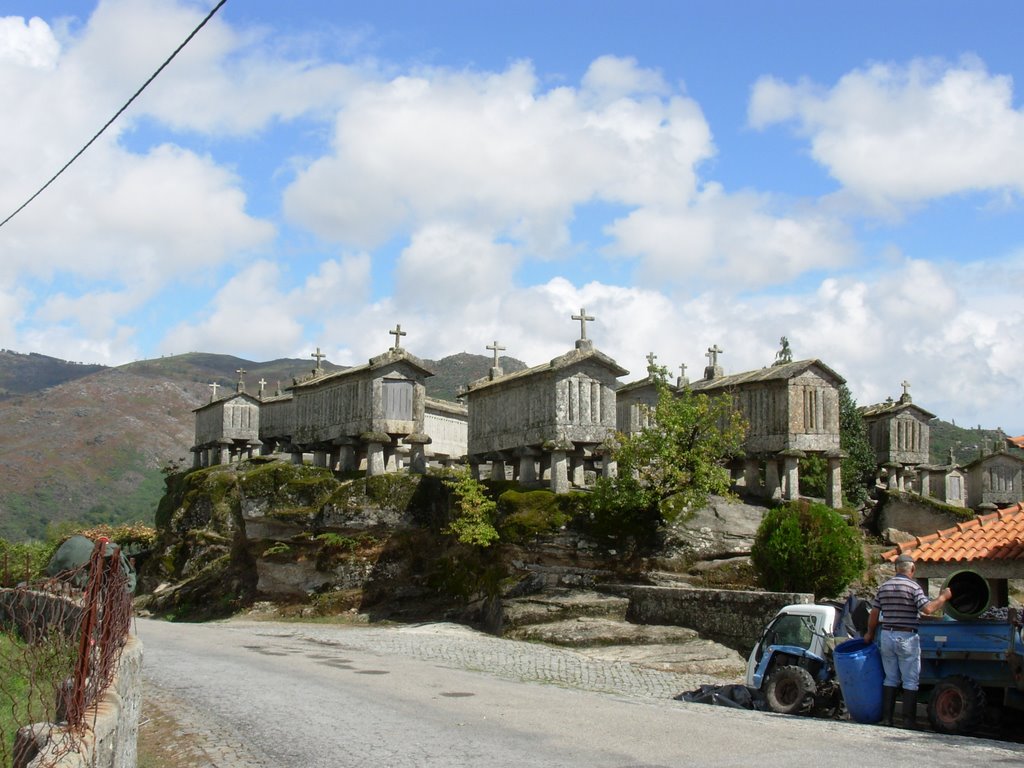
A fine rice house, used only for storage. The form is a lot like
granaries from as far away as
Portugal. There is a Lanna folk tradition, that as a boy went out to search for a girl to marry (Lanna culture is matrilineal, so the boy marries into the girl's family) he wanted to find a family with a rice house with more than six post (too few and he would starve, not enough rice), and less than fourteen (too many and he would have to work harder that a water buffalo). This one is on the large side.

Just a little gratuitous anthropophagy. Because nothing tastes quite like people.

After a full day of lectures and touring we went to the Chiang Mai university campus for an evening of food, music and dance. Northern Thai food is a sight better than people, though I would have eaten that curry no matter what was in it. Maybe that's what the anthropophagi were making.

Nice hat?

This mask dance was one of our favorites.
We call this one, informally, the butterfly dance, though it could be of a bird or a bat. We don't know much about traditional Thai dance yet, but we have been told that the different hand positions have different meanings.
Day Two:

Day two began early with a visit to a tiny little wat outside of Lampang, and it didn't end until about 16 hrs later. Wat Pongyangkok is about three hundred years old. Originally it stood on a platform one meter above the ground, but now it sits about eight inches below. It is unique in that it has retained its open-air form. Normally villagers "restore"their wats by putting brick and stucco walls between the outer posts, and then covering the thing with bits of colored mirror and sheets of gold colored flashing.

Vithi in the interior of Wat Pongyangkok. Also: the back of Jami's head, and the back of
Nok's head.

The pillars in Wat Pongyangkok were just amazing. They are covered with lacquer and goldleaf. On our
Flickr page you can see how this is done, since they were the inspiration for one of my designs.

Our next stop, and the last one I'll talk about in any detail, was Wat Phrathat Lampangluang in Lampang. It is an old citadel type wat, esablished 800 year ago, though its current incarnation is 15th century. In the photo you can see a tree inside the walls off to the left (not the palm tree). There is a legend that the Buddha passed through here on his travels. A Luah man (Austro-Asiatic ethnic group) offered him a piece of bamboo full of honey, and he was so happy having met the Buddha that he wandered off without his walking stick, leaving it stuck in the ground. When he came back the walking stick had sprouted, and grown into a tree. However, it had been put in the ground upside down, so the branches sloped downwards instead of up and the leaves were upside down. As legend has it that tree is here.

So how does a horse eat a Japanese Ceramicist? He sniffs along, sniffs along, takes a little bite. Sniffs along, sniffs along, takes a bigger bite. Sniffs along, sniffs along...
Masamichi Yoshiakawa was one of the artists participating in this workshop (he and his
wife Chikako). He thought it might be neat to pet this little pony, which promptly took a chunk out of his arm. In this photo
here, you can see a blurry Masamichi with his sleeve rolled up to keep it out of the wound.

This was a particularly nice bodhi tree. These paintings typically back the Buddha images in the depths of the wat.

This little shrine at Wat Phrathat Lampangluang is covered with white on blue signs that say "NO GIRLS ALLOWED!"

Inside is the footprint of the Buddha, who, even in life, had very large, stylized feet.

The room also acts as a camera obscura, which allows you to see an image of this stuppa...

upside down.

In the afternoon after lunch at Vithi's
colonial era house in Lampang he took us to a wat where two large groups of hundred year old paintings had been discovered in the ceiling. This was one of my favorites, with the vagabond treed by a huge pack of dogs, and things dropping from his bag.

The last wat we visited was fairly recent (about 100 years old), way out in the country and very, very folksy. Jami found this little guy holding up the pulpit, and he was just too cute not to share.
Days three through twelve:
These days include our trip to
Maesai, Jami's indigo work shop at Studio Naenna (which she
will write a post about, I already uploaded a video about it), and lots of work on our projects. We began the workshop not quite sure what we were supposed to be doing (the idea for my first project came suddenly as a complete image about ten minutes before I began talking to my assistant to tell him what materials I'd need), and it wasn't made clear to us that we actually needed to make two prototypes until Friday.

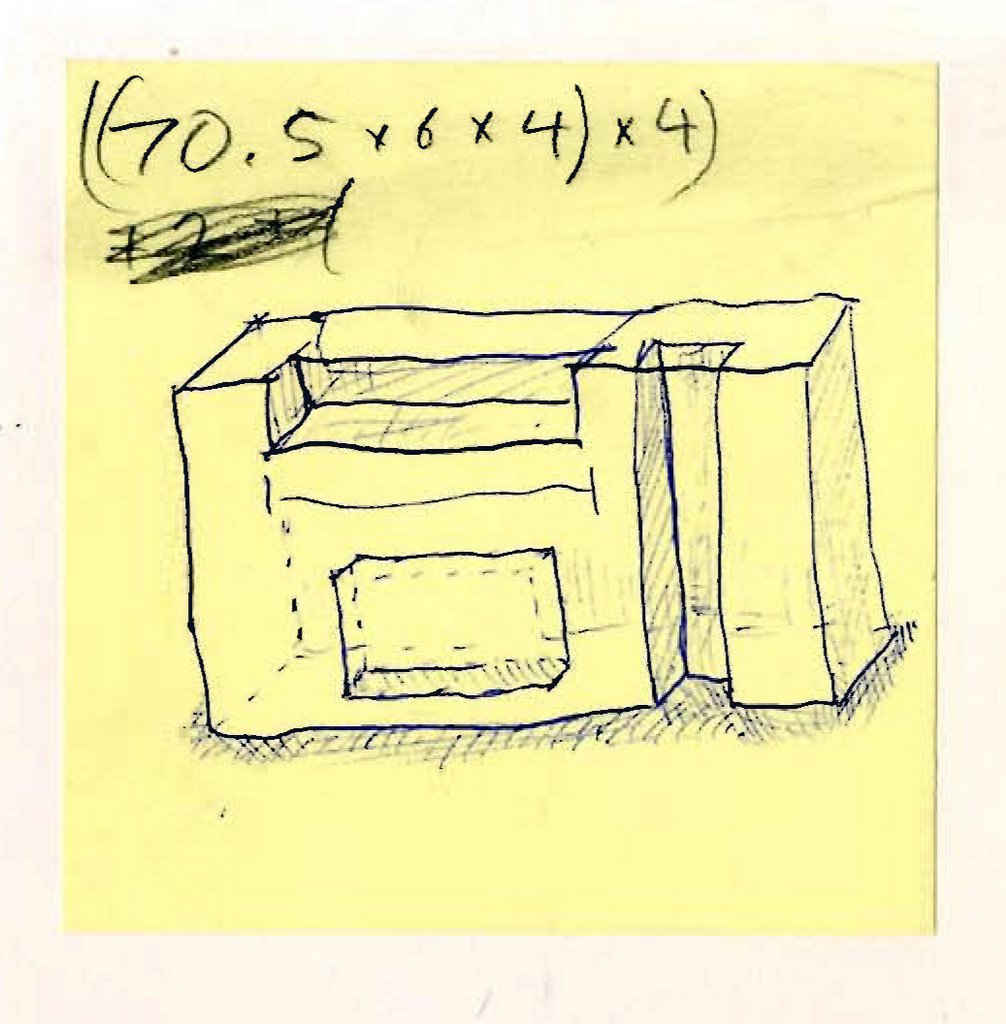
My original idea was to make a section of a column from a temple out of solid teak. A twenty four inch piece of solid teak, eight inches in diameter, proved to be hard to find, and would have been way heavy.

So I settled on bamboo, and turned it into a vessel. The base is inspired by the little feet on sticky rice baskets.

I think it turned out alright. I like the gold leaf on the black lacquer, but I kind of have a thing against precious materials, so I don't know if there will be a repeat (unless someone pays me to it). The part of the wat occupied by the pillars represents the Cosmic Jungle in the Theravada Buddhist cosmology. In our own American secular spiritual tradition (if that's not an oxymoron), i.e. Transcendentalism, we go to the woods to gain enlightenment (or at least you do if you are a genteel resident of Concord, Mass and have the luxury of romanticizing nature). In Therevada Buddhism you have to pass through the woods, then traverse seven rings of mountains, and then climb an even bigger mountain, only to find Siddhartha Gautama already sitting there. So I decided that it would be nice to package a piece of the Cosmic Jungle for export to the west.

The naga love spoon went through many stages of revision. I even had a completely different piece roughed out before I decided that I hated it (our friend LB might recognize the remains of her name and email address which I erased from the bottom of this drawing. No spam for her).

The overwhelming response from the Thai regarding this spoon was, "so cute!" the leaf forming the bowl is, of course, a bodhi leaf.
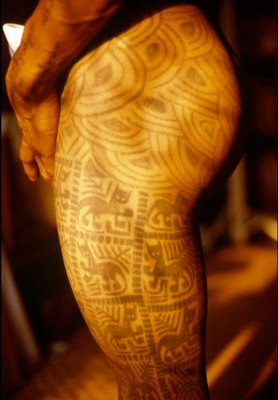
Jami's project involved tattooing male cabaret dancers.

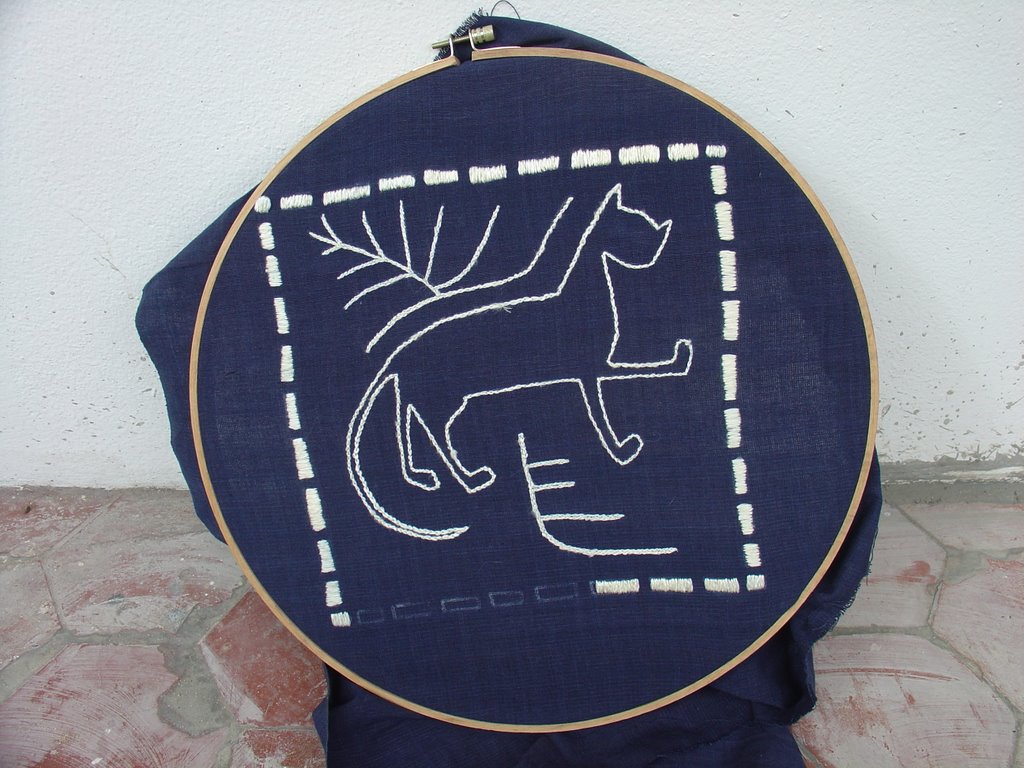
Just kidding. Those are actually traditional leg tattoos worn by Northern Thai men well into the twentieth century. Since boys usually got kicked out of the bedroom out onto the porch to sleep with grandpa around the age of nine, many, as they do today, ended up becoming novitiates at a local wat. Those that decided the life of celibacy was not for them left during their teens and joined a trade caravan, and went looking for a reasonably sized rice house. The leg tattoos were their cultural currency: the fish scale patterns endeared them to potential mother-in-laws on the northern routes up into China, while the cats worked in the southwest and out to the coast, where boats came from Sri Lanka.

A dedicated team of women from a crafts circle somewhere outside of Chiang Mai helped finish all these fish scales in time.
Day Thirteen:
In the morning all the participants gave brief presentations of their projects and prior work. The westerners went last. I wish everyone had a website for me to refer you to, but the only ones that do are
Dave Besseling and
Ofer Zick (though if anyone knows of any more I'll happily take corrections). For dinner we headed to a fancy open air restaurant that specializes in Lanna cuisine. And then the fun began.

Yes these are what you think they are. Bug hors d'oeuvres. I ate the one on the bottom. It popped, and left a weird film on my teeth, but it tasted OK. To our surprise, no amount of teasing from Ofer and Dave could get the Thai art and design students to try one. Instead they burnt their's to crisps in the candles.

The highlight of the evening was setting off hot air balloons over the pond.

A couple got caught in a tree, but thankfully they worked their way out before catching anything on fire.
These lovely ladies (oops, laddies i mean) were probably a close second or third after the balloons and bugs. It kind of surprised us how common transvestitism is here in Thailand, but it has none of the stigma associated with it in the states. There's matriarchy for you. Everybody just gets along.
 How's that for a poo eating grin?
 This is one of the drawings I showed, the other can be seen here.
 And some details. This was drawn on saa paper, which is made from mulberry bark.
 Teak is neat. It has big leaves.
 This image was inspired by an etching from a weird Scandinavian encyclopedia we have floating around the house. The tittle says "school in the year 2000" and shows a portly school master tossing books into a glorified meat grinder. The grinder is connected to wires leading to these strange apparati the students wear while seated at their desks. They're about six years too late, but I think Google has this in the works.